Best Flashlight for Outdoor and Emergency Use: What to Look For
A sudden power cut, roadside problem, or dark desert campsite can quickly show why a dependable torch matters.
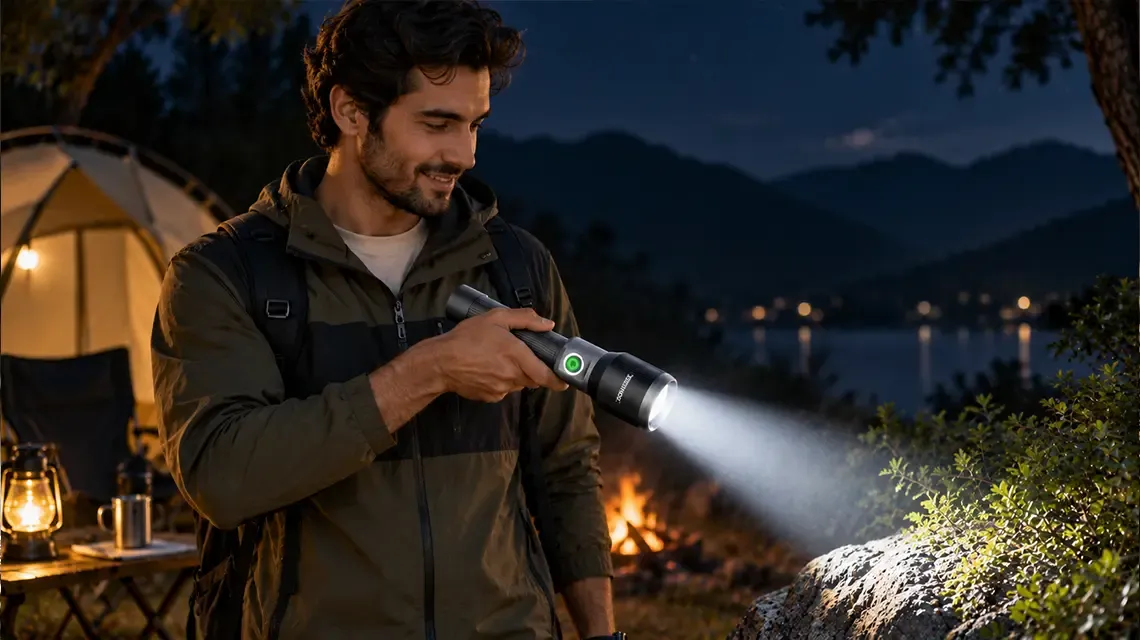
The best flashlight is not simply the brightest model; it should provide suitable beam distance, runtime, portability, and controls for its intended use. Sonashi offers rechargeable lighting options for UAE homes, cars, travel bags, and outdoor activities.
Before buying, decide where the flashlight will be kept and how it will be used. A compact home emergency torch has different requirements from a long range flashlight for camping or outdoor navigation. This guide explains the specifications that matter and how UAE shoppers can compare them accurately.
What Makes the Best Flashlight for Different Uses?
The best flashlight matches its primary task. No single combination of brightness, beam width, size, and battery type is ideal for every situation.
- Home emergencies: Simple controls, reliable runtime, and accessible storage matter most.
- Camping and desert outings: Prioritise beam distance, grip, durability, and battery planning.
- Car emergencies: Choose a portable model with visible lighting modes and secure storage.
- Travel: Look for manageable size, weight, and an appropriate charging method.
- Power cuts: Keep a charged flashlight where household members can reach it easily.
The best flashlight for outdoor use may have a stronger, more focused beam, while the best flashlight for emergencies may prioritise straightforward operation and dependable backup lighting.
What Features Should You Look for in a Flashlight?
Look for suitable brightness, beam distance, battery type, runtime, portability, and build quality. The right balance depends on whether the flashlight is intended for indoor outages, vehicle use, travel, camping, or long-distance outdoor visibility.
Brightness and Lumens
Lumens indicate the total quantity of visible light produced. A higher number generally means more light output, but it does not automatically make a flashlight more suitable.
High brightness can help outdoors, while a lower setting may be more comfortable indoors and may extend runtime. Compare lumen figures only when they are documented by the manufacturer.
Beam Distance and Pattern
Beam distance describes how far useful light is projected. A focused beam supports long-distance visibility, while a wide beam illuminates a broader nearby area.
A long range flashlight can be useful for desert camping, roadside checks, or inspecting an outdoor area. A wider beam may be better for a room, tent, pathway, or vehicle interior. Zoom functions allow some models to adjust between focused and broader coverage.
Battery Type and Runtime
Disposable-battery torches can remain useful when spare batteries are available. A rechargeable flashlight avoids repeated battery replacement but must be kept charged.
Runtime varies with battery capacity, brightness mode, battery condition, product design, and usage. Check the manufacturer-stated runtime for each mode rather than assuming maximum brightness will last throughout a trip or outage.
LED Technology
An LED flashlight uses light-emitting diodes rather than a traditional filament bulb. LEDs are widely used in portable lighting because they can provide useful output in compact, battery-powered designs.
LED wattage, lumens, lens design, and beam pattern should be considered together. Wattage alone does not tell you how well a flashlight will perform for a particular task.
Size, Weight and Portability
A flashlight kept in a handbag or kitchen drawer should be compact and easy to reach. A camping flashlight may be larger if the additional size supports the required battery and beam.
Check whether the torch fits securely in a backpack, glove compartment, emergency kit, or storage drawer.
Durability and Controls
Look for a comfortable grip, accessible switch, solid body, and controls that are easy to understand in darkness. Features such as water resistance, shock resistance, or corrosion resistance should only influence your decision when they are stated on the official product page.
How Do You Choose the Best Flashlight for Outdoor Use?
For camping, hiking, road trips, and desert outings, choose a torch with adequate beam distance, manageable weight, reliable runtime, and a comfortable grip. Multiple brightness settings can help conserve battery power when maximum output is unnecessary.
A powerful flashlight may improve long-distance visibility, but also consider:
- How long the trip will last
- Whether charging will be available
- Whether spare power is required
- How the torch will be carried
- Whether a focused or wide beam is more useful
- Whether the documented build suits the environment
Do not leave rechargeable devices inside a hot parked car for extended periods. Follow their storage and operating instructions, particularly during UAE summer.
What Is the Best Flashlight for Emergencies and Power Cuts?
The best flashlight for emergencies is easy to find, simple to operate, sufficiently bright, and ready to use. A flashlight for power cuts should be stored in a consistent location and tested regularly.
Useful locations include:
- Near the main entrance
- Beside a bed
- Inside a household emergency kit
- In the car
- In a camping or travel bag
A home emergency light supports visibility but does not replace a broader preparedness plan. The American Red Cross power-outage guidance recommends flashlights instead of candles to reduce fire risk.
How Important Are Brightness and Beam Distance?
Brightness is the amount of light produced, beam distance is how far useful light travels, and beam width is how broadly that light spreads.
A very bright flashlight is not automatically the best choice. Indoor tasks may need broad, moderate illumination, while outdoor searching may require a focused long-distance beam. Select these specifications according to the intended environment and required runtime.
Rechargeable vs Battery-Powered Flashlights
Feature | Rechargeable Flashlight | Battery-Powered Flashlight |
Charging | Uses a compatible charging method | Requires replacement batteries |
Convenience | Useful for regular use when charged | Useful when spare batteries are available |
Emergency preparation | Must be tested and kept charged | Requires fresh backup batteries |
Outdoor use | Convenient when charging is available | Practical for trips with sufficient spares |
Running cost | Can reduce repeat battery purchases | Requires ongoing battery replacement |
Some households keep both types so one can provide backup for the other.
Flashlight Feature Comparison
Feature | Why It Matters | Ideal For |
Brightness | Determines total visible output | Home and outdoor use |
Beam distance | Indicates how far useful light reaches | Camping and roadside checks |
Beam width | Affects nearby area coverage | Rooms, tents and pathways |
Battery type | Determines charging or replacement needs | Emergency and regular use |
Runtime | Indicates expected operating duration | Power cuts and longer trips |
Size and weight | Affect storage and portability | Travel, cars and backpacks |
Build quality | Matters during repeated handling | Outdoor and emergency use |
Light modes | Balance output and battery use | Mixed indoor and outdoor tasks |
What Should UAE Shoppers Check?
When comparing products on Sonashi UAE, Noon, Amazon.ae, Carrefour UAE, Jumbo, or Sharaf DG, verify specifications on the current listing instead of relying only on promotional titles.
Check the final AED price, seller identity, charging method, battery capacity, stated runtime, lumens, beam distance, product dimensions, included accessories, and warranty terms. Availability and specifications can change, so confirm them before ordering.
For example, the Sonashi rechargeable LED torch SLT-604Z is listed with 1,500-lumen output, a range of up to 1,200 metres, a 4,000mAh battery, Type-C charging, and multiple modes.
The Sonashi rechargeable torch SLT-605Z is listed with 2,000 lumens, a range of up to 1,200 metres, a 4,000mAh battery, Type-C charging, and three hours of continuous use. These documented differences help shoppers compare use cases without declaring one model universally superior.
Sonashi was established in 1993 and distributes products across more than 80 countries. Buyers should still review each product page individually for current specifications, availability, accessories, and applicable warranty information.
Practical UAE Emergency Flashlight Checklist
Before buying, check:
- Brightness in lumens, where stated
- Beam distance and pattern
- Battery or charging type
- Runtime for each mode
- Size and weight
- Grip and switch design
- Verified durability features
- Warranty information
- Intended indoor or outdoor use
Conclusion
The best flashlight is the model that fits its intended use, whether that means camping, car emergencies, travel, or power cuts. Compare brightness, beam distance, battery type, runtime, portability, and verified durability before buying. UAE shoppers can explore Sonashi’s rechargeable lighting range to compare current torch specifications and choose a practical option.
Frequently Asked Questions
1. What is the best flashlight for outdoor use?
The best outdoor flashlight has suitable beam distance, usable runtime, a comfortable grip, and a size you can carry easily. For camping or desert trips, compare documented brightness, battery capacity, charging options, light modes, and durability features. No single lumen rating is ideal for every outdoor activity.
2. What is the best flashlight for emergencies?
A good emergency flashlight is easy to locate, simple to operate, and supported by a reliable battery plan. Choose sufficient brightness for essential movement, check the stated runtime, and store it somewhere accessible. Test rechargeable models regularly and keep disposable-battery models with compatible spare batteries.
3. Is a rechargeable flashlight better for power cuts?
A rechargeable flashlight is convenient for power cuts when it is maintained and kept charged. It can reduce repeated battery purchases and may offer several light modes. However, a battery-powered backup remains useful if charging is unavailable. The better option depends on your preparation routine and expected outage duration.
4.How many lumens should a good flashlight have?
There is no universal lumen requirement. Indoor emergency tasks may need less output than outdoor searching or long-distance visibility. Compare lumens with beam distance, beam width, runtime, and light modes. A lower setting can be more practical when preserving battery power matters more than maximum brightness.