How to Iron Clothes Properly: Easy Tips for Wrinkle-Free Clothes
A shirt can look tidy on its hanger and still develop creases across the collar, cuffs and sleeves before you leave home. Learning how to iron clothes starts with checking the care label, choosing the permitted heat setting and smoothing one section at a time.
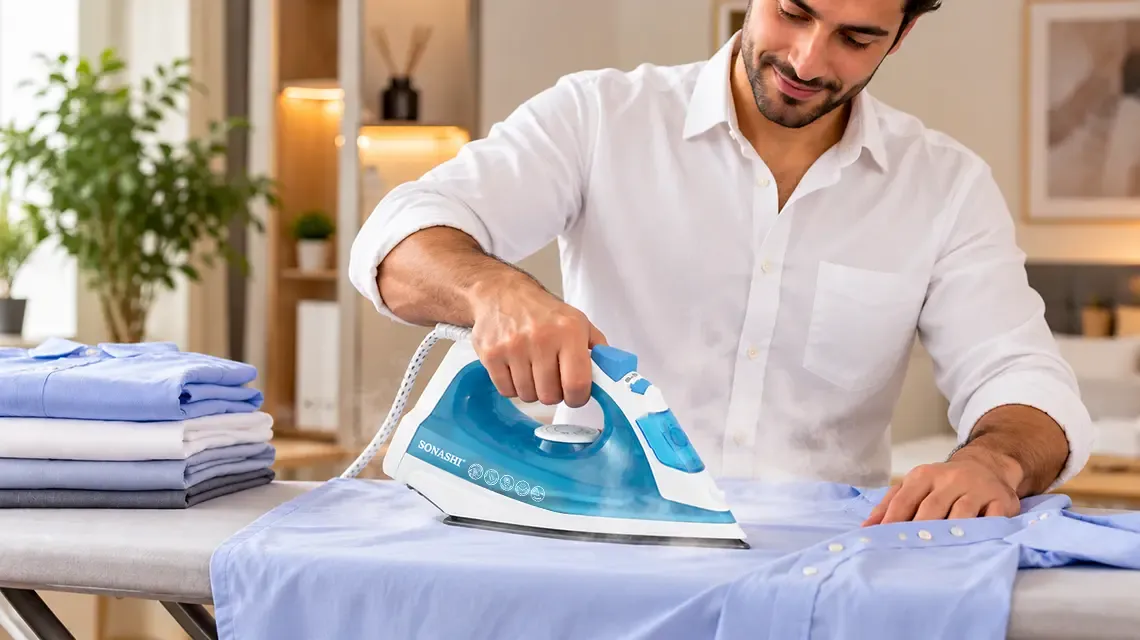
For UAE households managing office shirts, school uniforms and everyday clothing, a short, organised ironing session saves repeated touch-ups. Sonashi offers electric irons for home use, but the technique matters just as much as the appliance: too much heat or pressure can leave damage that another wash will not remove.
How to Iron Clothes Without Creating New Creases
Begin with clean clothing and a stable, padded ironing board. Ironing over a stain can make it harder to remove, while a wrinkled board cover can transfer its pattern onto the garment.
- Read the label. Check whether ironing and steam are allowed.
- Sort by permitted heat. Iron low-temperature items first, then increase the setting for other garments.
- Check the soleplate. Residue can catch on fabric or transfer marks.
- Lay one section flat. Smooth it by hand before bringing the iron down.
- Use controlled passes. Move along the fabric rather than scrubbing back and forth.
- Hang the garment afterwards. Let it cool and dry before wearing or folding it.
When lowering the temperature, allow the iron time to cool. Moving the dial does not immediately reduce the soleplate’s heat.
How Do You Iron Different Fabrics Safely?
The garment label takes priority over general fabric advice. A cotton shirt with a printed design or synthetic lining may need different treatment from plain cotton.
Fabric or garment | General approach, if permitted | Main precaution |
Cotton shirts | Use the labelled setting; slight dampness may help | Do not iron directly over prints |
Linen | Work in small sections; use permitted moisture or steam | Avoid repeatedly pressing one spot |
Polyester and blends | Begin with a low permitted setting | Excess heat can cause shine or distortion |
Silk | Iron inside out with a pressing cloth, following the label | Avoid unapproved spray or steam |
Wool | Press gently through a cloth where permitted | Avoid stretching or flattening the fabric |
Embellished abayas or dresses | Work around decorations and follow care instructions | Keep heat away from beads, sequins and adhesives |
For unfamiliar symbols, consult GINETEX’s textile care-symbol guidance. The dots indicate permitted ironing temperature ranges; a crossed-out iron means the garment should not be ironed.
How Do You Iron a Shirt in the Right Order?
Iron smaller, structured parts first so the larger panels do not become creased while you handle them.
Collar and cuffs: Unbutton them and lay them flat. Work from the outer edges towards the centre to reduce bunching.
Shoulders: Fit each shoulder over the narrow end of the board. Press around the seams without pulling the shirt out of shape.
Sleeves: Align the seams and smooth both layers. Avoid pressing the outer fold if you do not want a sharp sleeve crease.
Front and back: Work panel by panel. Guide the iron around buttons rather than over them, then hang the shirt immediately.
For school uniforms or kanduras, check whether decorative stitching, trims or fabric blends require a lower setting.
Is Steam or Dry Ironing Better for Removing Wrinkles?
Steam helps relax wrinkles in fabrics that tolerate moisture. Dry ironing provides heat without added steam and suits garments whose care instructions restrict moisture.
A Sonashi dry iron is an option for straightforward pressing. For users who need several operating modes, the Sonashi Steam Iron lists spray, steam, burst-steam, dry-ironing and self-clean functions.
Use only the water recommended in the appliance manual. Steam settings must also match the iron’s operating instructions; using steam at an unsuitable temperature may cause dripping.
Which Ironing Habits Help in UAE Homes?
During summer, balcony-dried clothing may become very dry before it reaches the ironing board. Where the care label allows, a light mist can help release stubborn creases without increasing the heat.
For busy Dubai and Abu Dhabi mornings, prepare workwear the evening before and leave space between hangers. Packing warm, freshly ironed clothes tightly into a wardrobe encourages new folds.
Keep the ironing area away from children, trailing cables and wet surfaces. Never iron clothing while wearing it. Unplug the appliance after use and allow it to cool before storage.
Sonashi’s heritage dates to 1993, with distribution across more than 80 countries. When comparing appliances, check documented features, build quality, cleaning instructions and official warranty terms for the specific model.
Frequently Asked Questions
1. Should clothes be damp or dry before ironing?
Some fabrics, particularly cotton and linen, are easier to press when slightly damp, provided their care instructions permit moisture. The garment should not be dripping wet. Delicate fabrics may require dry pressing instead. Check the label before spraying water, and allow the clothing to dry fully before storing it.
2. Why does ironing leave shiny marks on clothing?
Shine can develop when excessive heat or pressure flattens the fabric’s surface, especially on dark garments and some synthetics. Use the permitted setting, turn the garment inside out and place a clean pressing cloth between it and the iron. Test an inconspicuous section before pressing visible areas.
3. Can I iron clothes without damaging prints or decorations?
Yes, if the garment’s care label permits ironing and you keep direct heat away from sensitive details. Turn printed clothing inside out and use a pressing cloth where appropriate. Avoid pressing beads, sequins, adhesive decorations or zips directly. Some embellished garments need professional care rather than home ironing.
Conclusion
Knowing how to iron clothes properly means controlling heat, moisture and handling rather than repeatedly pressing the same wrinkle. Follow the care label, flatten each section before ironing and give garments time to cool before storage. For everyday household routines, compare Sonashi irons, checking the operating modes, maintenance requirements and warranty information that suit your clothing and frequency of use.