How to Make Fresh Juice at Home: Easy Tips for Better Homemade Juice
Fruit juice can turn watery, overly sweet or unpleasantly foamy when the ingredients and liquid are added without a plan. Knowing how to make fresh juice means choosing ripe fruit, adding only enough water to help the blades circulate and deciding how much pulp you want to keep.
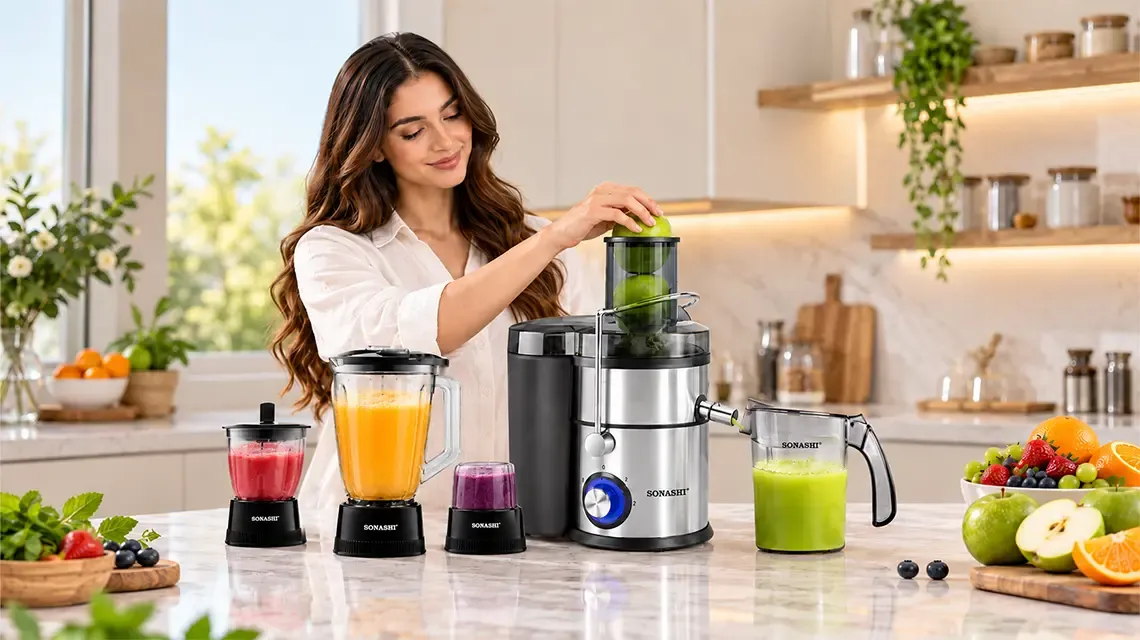
For UAE families preparing breakfast before school or professionals fitting cooking around a commute, small batches are manageable and reduce waste. Sonashi’s blenders and mixer grinders offer equipment options for home preparation; the recipes below explain how to get more predictable results from your blender.
How to Make Fresh Juice in a Blender
A blender breaks fruit into a drinkable mixture rather than separating its juice from the pulp. Leave the mixture unstrained for a thicker drink, or pass it through a fine sieve for a lighter consistency. Straining removes some of the fibre-containing pulp.
- Wash before cutting. Rinse produce under running water, including fruit whose peel you will remove.
- Prepare the fruit. Remove stones, citrus peel and unsuitable seeds. Cut away damaged areas.
- Chop into manageable pieces. Smaller pieces circulate more readily and reduce the chance of fruit becoming lodged above the blades.
- Add liquid as instructed. Follow your blender’s loading order and maximum-fill guidance.
- Blend and assess. Use short cycles within the appliance’s operating limits. Add water gradually if the mixture does not circulate.
- Choose the texture. Serve with pulp or strain, then taste before adding anything else.
Never reach into the jar while it is attached to a powered appliance. If ingredients stop moving, switch off and unplug before adjusting them.
Which Homemade Juice Recipes Should You Try First?
These fresh fruit juice recipes each make approximately two small servings. Actual yield depends on fruit size and whether you strain the mixture.
Watermelon, Lime and Mint
Ingredients: 300 g chilled watermelon flesh, 1 teaspoon lime juice, 3 mint leaves and up to 50 ml cold drinking water.
Remove the rind and hard seeds, then blend the watermelon with lime and mint. Start without water because watermelon releases plenty of liquid. Add a little only if needed. Taste before increasing the lime; too much can overpower the fruit.
Orange and Pineapple
Ingredients: 2 medium oranges, peeled and deseeded; 150 g pineapple flesh; and 75–125 ml cold drinking water.
Remove the pineapple’s skin and tough core. Blend the fruit with 75 ml water, adding more in small amounts if necessary. Orange membranes create a pulpy texture, so sieve the drink if you prefer it smoother. Naturally sweet pineapple usually makes added sugar unnecessary.
Mango and Lime
Ingredients: 200 g ripe mango flesh, 200 ml cold drinking water and 1 teaspoon lime juice.
Blend until the mango is evenly dispersed. This mixture is thicker than watermelon juice; add water one tablespoon at a time to adjust it. Lime provides a sharper finish without requiring extra sweetness. Serve chilled rather than loading the blender with ice unless its manual permits ice crushing.
Recipe | Starting liquid | Texture before straining | Useful adjustment |
Watermelon, lime and mint | 0–50 ml | Light and juicy | Limit water to preserve flavour |
Orange and pineapple | 75 ml | Pulpy | Sieve for a smoother drink |
Mango and lime | 200 ml | Thick and spoon-coating | Dilute gradually |
If these recipes are becoming part of your breakfast routine, explore the Sonashi 4-in-1 Juicer Blender SJB-401N when comparing appliances for homemade fruit drinks. Review its listed functions and operating instructions to confirm which attachment suits your preparation method.
How Do You Balance Flavour Without Adding Too Much Sugar?
Use ripe fruit and taste the finished blend before sweetening it. A small amount of citrus can balance a sweet mango or watermelon drink, while extra water reduces intensity but also dilutes flavour.
For healthy blender recipes, keeping some pulp and serving modest portions are practical choices. Homemade juice still contains fruit sugars and should complement meals rather than replace whole fruit.
Avoid combining several strong ingredients immediately. Test one fruit with a small amount of citrus first; that makes it easier to identify what needs adjusting.
Which Blender Features Matter for Fruit Drinks?
Choose jar capacity around the amount you actually prepare. A personal blending bottle suits a small drink, while larger household batches need adequate working capacity and room below the maximum-fill line.
The Sonashi Sports Blender SB-200 lists a 550 W motor, two 600 ml bottles with lids, one-button control and overheat protection. Bottle capacity is not permission to exceed the marked fill limit, and portable bottles do not establish cordless operation.
Sonashi’s history dates to 1993, with distribution across more than 80 countries. Before purchasing, check model-specific cleaning instructions, documented features and official warranty terms. Compare other kitchen appliances for home preparation according to your routine and storage space.
How Should You Store Fresh Juice During UAE Summer?
Prepare what you can drink promptly and refrigerate any remainder straight away in a clean, covered container. For Dubai or Abu Dhabi commutes, use an insulated bag with a cold pack; a bottle lid alone does not keep juice cold.
Homemade juice is unpasteurised. Washing produce reduces contamination but does not make the drink sterile. Follow the FDA’s fresh-juice safety guidance, particularly when preparing drinks for children, pregnant people, older adults or anyone with reduced immunity.
Frequently Asked Questions
1. Do you need to strain juice made in a blender?
No. Straining is a texture preference rather than a required step. Leaving the pulp produces a thicker drink and retains more of the fruit’s fibre-containing material. A fine sieve creates a lighter consistency. Try a small amount both ways before straining the entire batch.
2. Why does my blender juice separate?
Separation occurs because fruit particles and liquid do not remain evenly suspended indefinitely. Stir or gently shake refrigerated juice before serving. Separation alone does not establish whether a drink is safe; handling, refrigeration and storage time still matter. Prepare smaller batches when you want a more consistent freshly blended texture.
3. Can I use frozen fruit to make juice?
Yes, if your blender is designed to process frozen ingredients. Follow its instructions, add the recommended liquid and keep within the fill limit. Frozen fruit usually creates a thicker drink, so allow it to soften slightly if permitted. Do not assume every personal blender can handle hard frozen pieces.
Conclusion
Learning how to make fresh juice at home starts with controlling liquid, choosing suitable fruit and adjusting texture after blending. Keep recipes small enough to drink promptly, taste before sweetening and refrigerate leftovers without delay. For equipment that matches your preferred serving size and kitchen space, explore the Sonashi blender category linked above, checking each model’s operating instructions and warranty information before choosing.