How to Make Waffles at Home: Easy Homemade Waffle Recipe
Weekday breakfasts often leave little room for trial and error. Knowing how to make waffles gives UAE households a warm breakfast that can be prepared in batches, adapted to different toppings and reheated when schedules do not align.
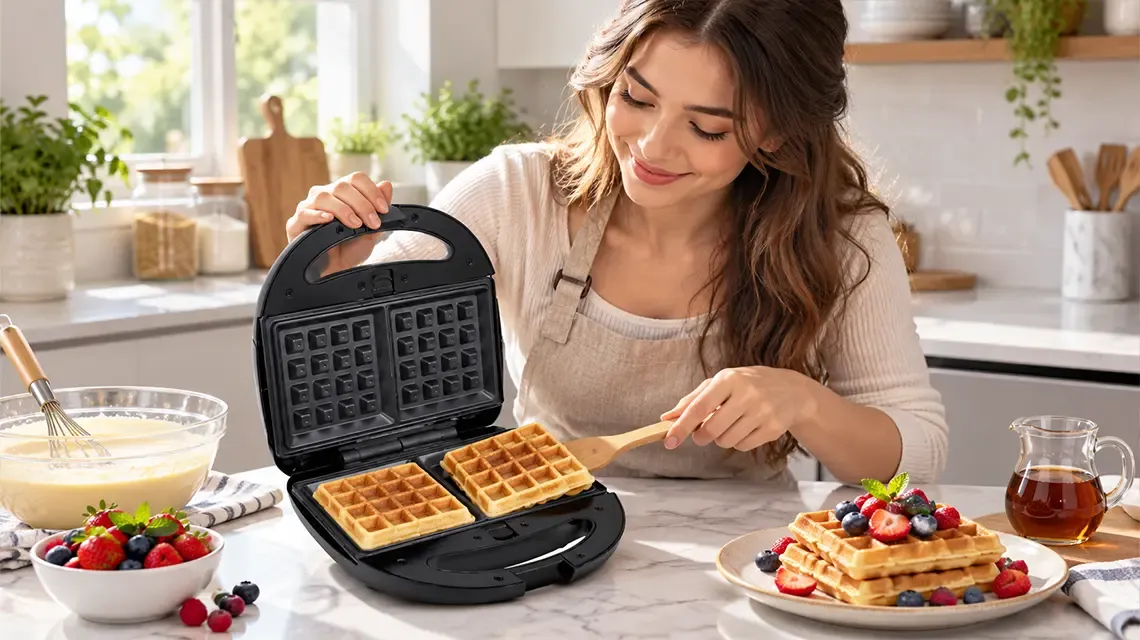
The method depends less on complicated ingredients than on batter consistency, plate temperature and knowing when to leave the lid closed. A Sonashi waffle maker can provide the shaped cooking surface needed for traditional waffles, while the recipe below explains how to manage the mixture and timing confidently.
What Do You Need for a Homemade Waffle Recipe?
This recipe produces approximately six standard waffles. Yield and cooking time will vary with the dimensions and depth of your appliance.
Ingredients
- 250 g plain flour
- 2 teaspoons baking powder
- 2 tablespoons caster sugar
- 1/2 teaspoon fine salt
- 2 large eggs
- 360 ml milk
- 85 g unsalted butter, melted and cooled slightly
- 1 teaspoon vanilla extract, optional
- A small amount of oil or butter for the plates, if required
Preparation time: About 10 minutes
Cooking time: Approximately 3–6 minutes per batch
Total time: Approximately 25 minutes
Flour creates the waffle’s framework, while baking powder introduces the gas that expands during cooking. Eggs keep the mixture together, and butter assists with flavour and browning. Sugar does more than sweeten the batter: it also encourages surface colour, so reducing it significantly may produce paler waffles.
How to Make Waffles with a Waffle Maker
1. Heat the appliance before mixing
Preheat the waffle maker according to its manual. Hot plates set the surface promptly, helping the batter hold its shape instead of spreading slowly and steaming.
2. Prepare the dry mixture
Whisk the flour, baking powder, sugar and salt in a wide bowl. Distributing the baking powder at this stage prevents one section of the batter from rising more than another.
3. Combine the liquids separately
In a second bowl, whisk the eggs with the milk, cooled butter and vanilla. Combining these first means the flour needs less stirring later.
4. Bring the mixtures together
Pour the liquid mixture into the flour. Fold with a spatula until the visible dry patches disappear. Stop while a few small lumps remain.
Overworked batter often produces firm, bready waffles because prolonged mixing develops more gluten. The desired consistency is thick enough to coat a spoon but loose enough to fall from it in a broad ribbon. Add milk one tablespoon at a time if the mixture is difficult to pour.
5. Fill the cooking plates carefully
Grease the plates only when the manufacturer recommends it. Pour batter into the centre, leaving a clear border because the mixture expands after the lid closes. It is better to slightly underfill the first waffle and adjust the next batch than clean batter from the appliance’s exterior.
The Sonashi Waffle Maker SWM-873 uses non-stick two-slice plates and includes a power indicator, cool-touch body, handle lock and overheat protection. Follow its operating instructions rather than assuming that timings from another appliance will transfer exactly.
6. Let steam guide the timing
Close the lid and allow the waffle to cook undisturbed. Most batches require approximately three to six minutes. A strong release of steam at the beginning is normal; when it slows considerably, check the colour and whether the waffle separates cleanly from the plates.
7. Cool it where air can circulate
Move the waffle to a wire rack. A flat plate traps condensation beneath it, while stacking hot waffles directs steam into their surfaces. Serve promptly or hold them briefly on a rack in a low oven while the next batch cooks.
How Do You Control Crispness and Fluffiness?
Crispness and softness are not opposites that come from entirely different recipes. They are influenced by heat, moisture, aeration and what happens immediately after cooking.
For a crispy waffle recipe, preheat the plates fully, keep the batter thick rather than watery and allow the exterior enough time to brown. Place every cooked waffle on a rack. For extra crunch, return cooled waffles to a toaster briefly before serving.
For a fluffy waffle recipe, use fresh baking powder and avoid unnecessary stirring. For more lift, separate the eggs, whisk the whites to soft peaks and fold them into the completed batter. This introduces air, although the standard method still produces a tender centre with less preparation.
How Long Should Waffles Cook?
Waffles usually take three to six minutes, but there is no universal setting. Plate depth, appliance temperature, batter quantity and sugar content all affect the result.
Desired result | Starting time | Sign to check |
Pale and soft | 3–4 minutes | Batter is set but lightly coloured |
Golden with a tender centre | 4–5 minutes | Steam has slowed and the waffle releases |
Firmer and more toasted | 5–6 minutes | Surface is deeper brown and feels dry |
Treat this table as a reference, not a fixed instruction. Opening the lid repeatedly releases heat and may tear a waffle before its structure has set.
Can You Make Waffles Without a Waffle Maker?
You can cook waffle batter without a dedicated appliance, but the result will resemble a ridged pancake rather than a traditional waffle. The paired heated plates of a waffle maker create the grid, cook both sides together and expose more surface area for browning.
When researching how to make waffles without a waffle maker, practical alternatives include a grill pan or a sandwich press approved for batter-based cooking. Use moderate heat, grease the surface lightly and turn a grill-pan version once its underside is stable. Never pour liquid batter into an appliance unless its instructions permit that use.
Method | Convenience | Texture control | Most suitable for |
Waffle maker | Cooks both surfaces together | Strong control over shape and browning | Traditional homemade waffles |
Grill pan | Requires turning and close attention | Crisp ridges but a softer flat surface | Occasional preparation |
Compatible sandwich press | Depends on plate design | Flatter result without deep pockets | Compact apartment kitchens |
How Can UAE Households Serve and Store Waffles?
Fresh fruit works particularly well in the UAE because toppings can change with what is available: berries, mango, banana and dates all add sweetness without turning the batter into dessert. Other options include labneh with honey, yogurt, nut butter, maple syrup or chocolate.
For a savoury breakfast, reduce the sugar to one teaspoon and add eggs, avocado or grilled vegetables after cooking. Small waffles also work on a Ramadan suhoor table alongside fruit and yogurt.
Cool leftovers completely before refrigerating them in a sealed container. Reheat them in a toaster, dry pan or air fryer so the surface regains some firmness. A microwave warms waffles quickly but generally leaves them softer. Batter containing eggs and milk should not remain on the counter for extended periods; follow recognised food-safety guidance for eggs and dairy.
For Dubai or Abu Dhabi apartments, a compact waffle maker can be more practical than heating a full oven for a small breakfast. Shoppers comparing appliances through brand stores or UAE retailers should review plate design, storage dimensions, controls, cleaning requirements and official warranty terms rather than relying only on price.
Established in 1993 and distributed across more than 80 countries, Sonashi provides UAE-available kitchen appliances for everyday household routines. Readers considering regular waffle preparation can compare the Sonashi waffle maker range alongside other kitchen appliances.
Conclusion
A reliable homemade waffle recipe comes down to controlled mixing, fully heated plates and enough cooking time for moisture to escape. Once those points are understood, toppings and texture can be adjusted around weekday routines, family breakfasts or Ramadan gatherings. Browse the Sonashi waffle maker collection to compare equipment for preparing waffles in a UAE home.
Frequently Asked Questions
1. What prevents homemade waffles from becoming crisp?
Insufficient preheating, thin batter and trapped steam are common causes. Heat the plates fully, avoid adding unnecessary liquid and continue cooking until the steam slows. Transfer the waffle directly to a wire rack. Placing it on a flat plate or beneath another hot waffle softens the surface quickly.
2. Why are my waffles heavy rather than fluffy?
Heavy waffles usually result from overmixed batter, inactive baking powder or an excessively thick mixture. Fold only until the dry flour disappears and check that the baking powder is within date. The batter should fall slowly from a spoon; add a little milk if it remains in a stiff mass.
3. Can waffle batter be prepared the night before?
It can be refrigerated overnight in a covered container, but the waffles may rise less because baking powder begins reacting after it meets liquid. For better lift, mix the dry and wet ingredients separately, refrigerate the wet mixture, and combine both portions shortly before the waffle maker is heated.
4. How should cooked waffles be reheated?
A toaster or dry pan restores more surface texture than a microwave. Refrigerated waffles can also be warmed briefly in an air fryer at a moderate setting. Reheat only until hot and crisp enough for serving, as excessive time removes moisture from the centre and makes the waffle brittle.