How to Make Whipped Cream at Home: A Step-by-Step Guide
Cream can change from runny to spoonable in minutes, then turn grainy while you are still reaching for the sugar. Learning how to make whipped cream means recognising when to slow down and stop, rather than following the clock alone.
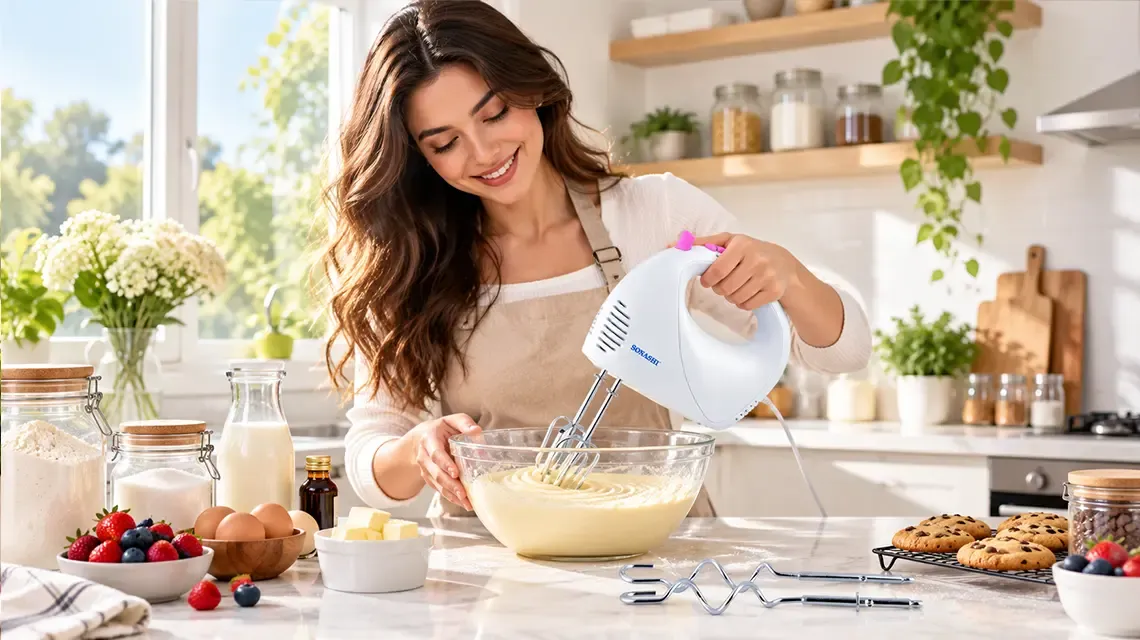
Sonashi hand mixers offer a convenient option for home preparation, but chilled ingredients and careful observation matter just as much. For UAE households decorating a birthday cake, serving fruit or finishing a weekend dessert, a small batch lets you control sweetness and texture without opening a ready-made topping.
Which Cream Should You Buy for Whipping?
Choose refrigerated dairy whipping cream or heavy cream with at least approximately 30% fat. Cream around 35–36% fat generally produces a firmer result. Check the carton rather than relying on the word “cream”: cooking cream, pouring cream and reduced-fat products may behave differently.
Milk cannot replace whipping cream in this recipe. Sweetened non-dairy whipping toppings are another product category; follow their packaging because the preparation and added sugar requirements differ.
Ingredients for an Easy Whipped Cream Recipe
- 250 ml cold dairy whipping cream
- 15 g icing sugar, approximately 2 level tablespoons
- 1/2 teaspoon vanilla extract, optional
Yield: Approximately 450–500 mlServings: Around six modest dessert toppingsPreparation: About 10 minutes, plus chilling equipment
The sugar adds sweetness; the air incorporated during whisking creates volume. Vanilla is optional, particularly when the cream accompanies an already strongly flavoured dessert.
How to Make Whipped Cream with a Hand Mixer
1. Chill the bowl and beaters
Refrigerate a clean metal bowl and beaters for approximately 15–20 minutes. Keep the cream refrigerated until you are ready to begin. Cold equipment helps prevent the cream warming during mixing, especially in a kitchen recently used for cooking.
2. Start slowly
Pour the cream into a bowl with enough space for expansion. Begin on low speed to limit splashing, then move to medium as the mixture becomes foamy.
For this task, the Sonashi 5 Speeds Hand Mixer lists five speeds and two beaters for eggs and cream. Use the beaters rather than the dough hooks, and follow the appliance’s operating limits.
3. Add sugar when the cream thickens
When the beaters begin leaving faint trails, add the icing sugar and optional vanilla. Continue mixing while moving the beaters around the bowl so the edges and centre develop evenly.
4. Pause and check the peaks
Switch off before lifting the beaters. Look at the shape left behind: does it collapse, curl gently or stand upright? Stop at the stage suited to your dessert.
5. Finish gently
As the cream approaches the desired texture, reduce the speed or finish with a hand whisk. The final changes happen quickly. Smooth, defined cream needs no additional beating simply because the recipe time has not elapsed.
How Long Should You Whip Cream?
A 250 ml batch may take approximately 2–5 minutes with a hand mixer, but cream temperature, fat content, bowl shape and mixer speed affect the timing. Use texture as your main guide.
Stage | What you will see | Useful application |
Thickened but flowing | Trails disappear quickly | Pouring over desserts |
Soft peaks | Lifted cream forms a tip that folds over | Fruit, pancakes and spooned toppings |
Medium peaks | Cream holds shape with a gently curved tip | Cake filling and spreading |
Stiff peaks | Defined peaks remain upright; texture stays smooth | Simple piping for prompt serving |
For whipped cream for cakes, remember that ordinary whipped cream needs refrigeration and will not hold like buttercream in warm conditions.
Can You Make Homemade Whipped Cream Without a Mixer?
Yes. Use a balloon whisk and a large chilled bowl. Whisk steadily until the cream thickens, then slow down to check the peaks.
Manual whisking usually takes longer and requires more effort, but offers close control near the finish. Place the bowl on a folded towel to stop it sliding. Avoid using a blender as a direct substitute unless its manufacturer provides suitable whipping instructions.
Why Has Your Cream Turned Runny or Grainy?
Cream stays liquid: Check its fat content and temperature. If the bowl feels warm, refrigerate the mixture briefly before trying again.
Cream becomes slightly grainy: Stop immediately. Gently fold in a small splash of fresh cold cream and reassess. Slight overwhipping can sometimes be improved.
Cream separates into solids and liquid: It has progressed towards butter. Continuing to beat will not restore whipped cream.
Cream loses definition after decorating: Warm cake layers, warm surroundings or extended storage can soften it. Cool cakes completely before adding the topping.
How Should You Serve and Store It in UAE Weather?
Keep homemade whipped cream covered and refrigerated at 4°C or below, and prepare it close to serving for the best texture. In Dubai or Abu Dhabi summer, take out only the amount needed rather than leaving the full bowl beside a dessert spread.
FoodSafety.gov’s guidance on refrigerating perishable foods sets a two-hour limit outside refrigeration, reduced to one hour above 32°C. These are safety limits, not recommended display times.
Sonashi was established in 1993 and is distributed across more than 80 countries. When choosing equipment, compare documented construction, cleaning access and official warranty terms alongside speed settings.
Frequently Asked Questions
Can I use granulated sugar instead of icing sugar?
Yes, preferably fine caster sugar, added while the cream is still relatively loose. It needs time to dissolve; adding coarse sugar near the end can leave a gritty texture. Avoid prolonged beating to dissolve it, because the cream may become overwhipped before the granules disappear.
Can I prepare whipped cream the night before?
You can prepare it ahead and refrigerate it promptly in a covered container, although some liquid may separate and the texture can soften. For the neatest finish, whip close to serving. If necessary, gently whisk chilled cream briefly before use, stopping as soon as its shape returns.
Do I need a stabiliser for whipped cream?
Not for toppings served soon after preparation. Stabilised recipes can help with longer refrigerated holding or more defined decoration, but require their own measured ingredients and method. Stabilising cream does not make it safe to leave unrefrigerated or suitable for prolonged outdoor display in UAE heat.
Conclusion
Knowing how to make whipped cream comes down to cold ingredients, gradual mixing and stopping at the right peak stage. Choose cream intended for whipping, check its texture frequently and keep finished desserts refrigerated until serving. Explore the Sonashi hand mixer collection to compare equipment for home baking, reviewing the supplied attachments, cleaning instructions and warranty terms before selecting a model for your kitchen.