Best Room Heater for Winter: What to Consider Before Buying
A cool bedroom at bedtime and a chilly corner beside your work desk do not necessarily need the same heating solution.
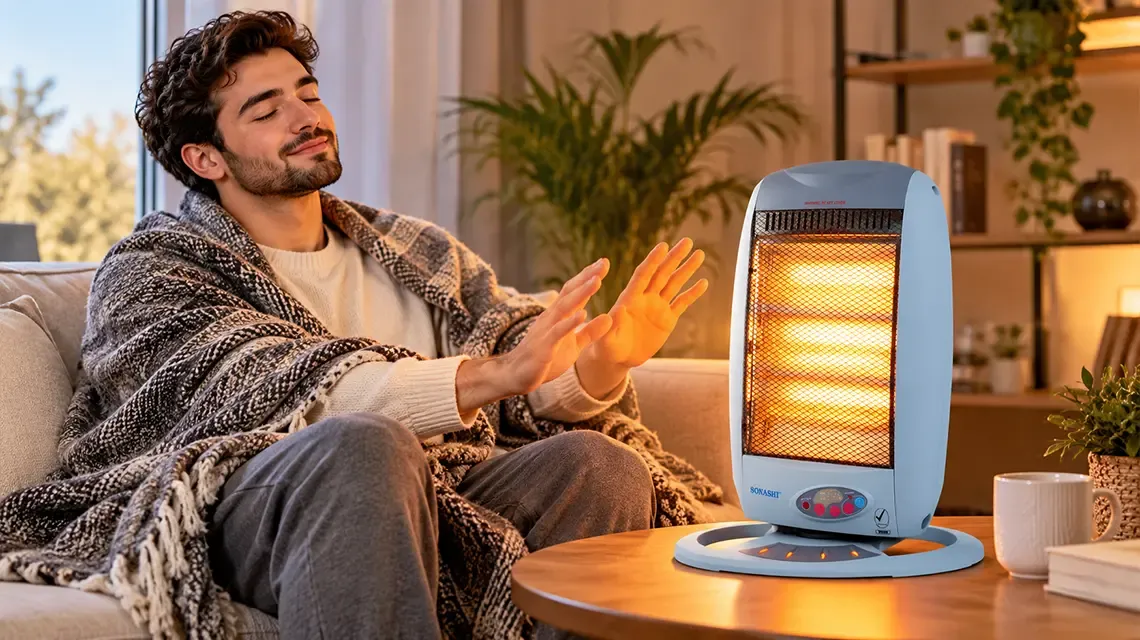
Choosing the best room heater for winter starts with where you feel cold, how long you need warmth and whether the room allows safe placement. Sonashi’s home-appliance range gives UAE shoppers options to investigate, but heating type, controls and operating instructions deserve attention before price. In Dubai apartments and Abu Dhabi villas, occasional winter heating may be enough; buying a larger appliance will not automatically make a draughty room comfortable or economical.
What Makes the Best Room Heater for Winter?
A suitable heater delivers useful warmth to the occupied area, offers manageable controls and can operate with the required clearance around it.
Before comparing models, identify:
- Room conditions: Floor area, ceiling height, draughts and open doorways affect heating needs.
- Heating duration: Brief desk use differs from several hours in a living room.
- Placement: Keep the heater clear of furniture, bedding and walking routes.
- Noise tolerance: Fan operation may matter when reading or working.
- Controls: Check heat settings, thermostat operation and documented safety features.
A heater for a small room should fit safely, not simply have a small casing. If the manufacturer publishes room-coverage guidance, check the conditions behind it.
Which Type of Electric Heater Suits Your Routine?
Choose the heating method around how you use the space. No single design is the best heater for home in every situation.
Heater type | How it provides warmth | Practical use | What to check |
Fan heater | Blows air across a heating element | Short periods of directed warmth | Fan noise, settings and clear airflow |
Ceramic fan heater | Uses a ceramic heating element with airflow | Local heating in occupied rooms | Controls, protection features and noise |
Oil-filled radiator | Warms a sealed fluid and transfers heat through its body | Gradual room warming | Warm-up time, weight and hot surfaces |
Radiant heater | Directs radiant heat towards nearby people and surfaces | Warmth in a particular seating area | Placement, clearance and exposed heat |
These are general design differences, not claims about Sonashi’s current stock. Check the exact product specification before purchasing.
Which Controls and Safety Features Are Worth Checking?
An adjustable thermostat can help regulate room temperature by cycling the heating. Separate power settings let you choose a lower or higher heat output; they are not the same as temperature control.
Look for explicitly documented overheat protection and, where available, tip-over shut-off. Neither feature replaces supervision or careful placement.
Sonashi’s official catalogue lists the fan heater with 1,000 W and 2,000 W settings, an adjustable thermostat, overheat protection and cool, warm and hot airflow selections. Confirm the specification and availability for the unit offered before buying.
When comparing other home appliances, check build quality, readable controls, cable condition and access to authorised service. Sonashi was established in 1993 and is distributed across more than 80 countries. Review the chosen model’s official warranty terms rather than assuming all parts and circumstances are covered.
How Much Electricity Will a Room Heater Use?
Electricity use depends on input power and operating time. A 2,000 W heater running continuously at full power for one hour uses approximately 2 kWh. A 1,000 W setting running continuously for two hours also uses approximately 2 kWh.
A thermostat may reduce consumption by switching the heating off periodically, but actual use varies with room conditions.
When shopping for an energy efficient room heater, compare controls and suitability rather than relying on the phrase “energy saving.” Lower wattage delivers less heat per unit of time and does not automatically mean a lower bill for equivalent comfort.
To heat a room efficiently, reduce unnecessary draughts, close internal doors where appropriate and heat the occupied space. Keep curtains well away from the appliance.
Where Should You Put a Heater in a UAE Home?
Place a portable room heater on a stable, level surface, following the manufacturer’s instructions. A heater for an apartment needs enough clearance even when floor space is limited.
The US Consumer Product Safety Commission’s portable electric heater safety guidance advises keeping heaters at least three feet—approximately 0.9 metres—from combustible items, connecting directly to a wall outlet and switching them off before sleeping or leaving them unattended. Follow any greater clearance required by the manual.
Never cover a heater with clothing or use it to dry laundry. Keep it away from water, children and pets. Do not route its cable beneath rugs.
After winter, unplug the appliance, let it cool and store it clean and dry. Before using it again after the UAE summer, inspect the cable and vents for damage or accumulated dust.
Frequently Asked Questions
1. What should I look for in a heater for bedroom use?
Choose manageable controls, an adjustable thermostat and documented safety features. Check noise information if fan sound matters to you. Position the heater away from bedding and curtains, use it while awake and switch it off before sleeping. A timer does not make unattended operation automatically safe.
2. Is a ceramic heater cheaper to run than a fan heater?
Not automatically. A ceramic heater may also be a fan heater, and electricity use depends mainly on input power and running time. Compare wattage, thermostat control and how effectively the model serves your occupied space. The heating-element material alone does not establish lower operating costs.
3. Can I use a heater with an extension lead?
Portable electric heaters should be connected directly to a suitable wall outlet, following the manufacturer’s instructions. Extension leads and power strips can overheat under high loads. If no suitable outlet is accessible, change the heater’s location or ask a qualified electrician about an appropriate permanent socket.
Conclusion
Choosing the best room heater for winter means matching the heating method, controls and power settings to your room and daily routine. Allow safe clearance, consider running time and check the exact model’s instructions before use. Explore the Sonashi heater category to investigate options, then confirm current specifications, availability, warranty coverage and service support before deciding which appliance suits your UAE home.