How to Choose an Emergency Light for Your Home
To understand how to choose an emergency light, match its brightness, battery runtime, charging time, light modes, and portability to the rooms you need to illuminate. Check verified manufacturer specifications, choose simple controls, and keep the unit accessible and charged. Larger homes may require more than one light for safe movement during an outage.
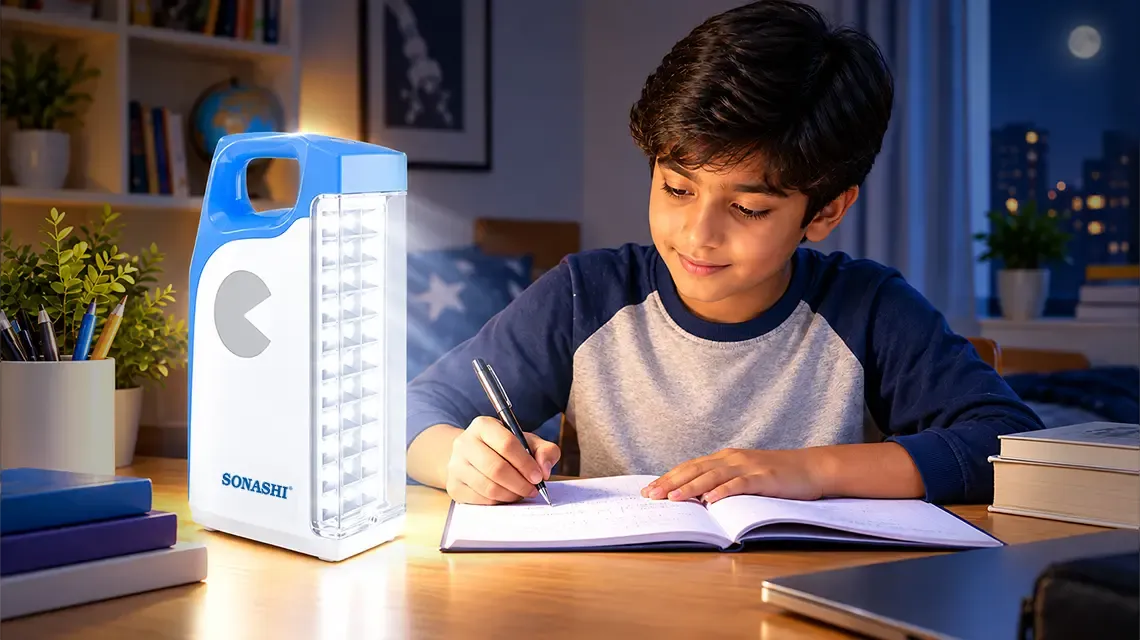
A reliable emergency light for home use provides basic visibility when normal lighting is unavailable. For UAE apartment residents, villa owners, families, and working professionals, the right model can illuminate bedrooms, hallways, kitchens, entrances, or staircases during a temporary power interruption. This emergency light buying guide explains how the key specifications affect everyday use.
How Do Emergency Lights Work?
An emergency light stores electrical energy in a rechargeable battery. When mains electricity is unavailable, the battery supplies power to the LEDs.
Some models must be switched on manually. Others can activate automatically during a power failure, but this is a model-specific feature and should be confirmed in the official specifications.
Battery capacity, battery condition, selected brightness level, and product design all affect operating time. Keeping the light charged according to the manufacturer’s instructions is essential; a high-capacity model offers little practical value if its battery is empty when needed.
Which Features Matter When Choosing an Emergency Light?
1. Brightness and Light Coverage
Brightness may be stated in lumens. More lumens generally mean greater visible output, but light distribution is equally important.
A forward-facing beam is useful for checking a fuse box or walking outside. A lantern with front and side illumination can spread light across a living room or kitchen. Choose according to the intended space rather than selecting the highest number automatically.
Do not compare products by LED count alone. LED size, output, arrangement, and brightness settings can differ.
2. Battery Capacity and Runtime
Battery capacity may be shown in milliamp-hours (mAh) or amp-hours (Ah). It helps when comparing similar products, but it does not guarantee a particular runtime.
Actual operating time can vary according to:
- Battery capacity and condition
- Selected brightness mode
- Number of active light panels
- Product design
- Charging history
- Operating conditions
Use the manufacturer-stated runtime for the exact mode you expect to use. A lower setting may provide longer power outage lighting than maximum brightness.
3. Charging Time and Method
Check whether a rechargeable emergency light uses AC power, DC input, USB, Type-C, or compatible solar charging. Also compare how long a full charge requires.
A charging indicator helps users monitor the process. Solar charging can provide another option on supported models, but it should not be assumed to replace mains charging unless the manufacturer says so.
4. Light Modes and Controls
Low, medium, high, and side-light modes provide flexibility. Lower settings may suit bedrooms and hallways, while brighter modes may be useful in a living room.
Controls should be visible, accessible, and easy to operate in darkness. Avoid buying a complicated model if children, older adults, or guests may need to use it.
5. Portability and Placement
A handle, stable base, and manageable weight make a light easier to move between rooms. Compact products suit small apartments, while larger multi-panel lanterns may provide more useful coverage in villas and family living areas.
Do not assume that a product is waterproof or suitable for exposed outdoor use unless that feature is documented.
Emergency-Light Features Compared
Feature | Why It Matters | What to Check |
Brightness | Affects visibility and area coverage | Lumens, beam direction and intended room |
Battery capacity | Supports backup operation | Verified mAh or Ah rating |
Runtime | Indicates expected operating period | Runtime for each brightness mode |
Charging | Affects daily convenience | Method, charging time and indicator |
Light modes | Balances output and battery use | Low, medium, high or side lights |
Portability | Helps users move it safely | Handle, size, weight and stable base |
Controls | Affects emergency usability | Simple, accessible switches |
Safety | Supports responsible charging | Approved charger and manufacturer instructions |
Which Emergency Light Suits Each Part of the Home?
Small Apartment
A compact lantern with a carrying handle may cover a bedroom, hallway, and living area when moved as needed. A second small light near the entrance provides useful backup.
Bedroom
Choose a model with an accessible switch and a lower brightness mode. Keep it close enough to reach without walking through a dark room.
Living Room or Kitchen
A wider light pattern or side-light function can illuminate shared areas more effectively than a narrow beam. Keep electrical lighting away from sinks, cooking heat, and wet surfaces.
Hallway or Staircase
Prioritise stable placement and enough light to reveal steps, corners, and obstacles. Do not leave a lantern where it could become a trip hazard.
Villa or Multi-Level Home
Consider one light per floor and additional lighting near stairways or exits. One portable unit may not cover several occupied rooms simultaneously.
How Do Sonashi Emergency-Lighting Options Compare?
The Sonashi LED lantern collection includes compact emergency lights, multi-panel lanterns, and solar rechargeable models. The examples below use specifications published by Sonashi UAE.
Model | Documented Features | Possible Household Fit |
52 LEDs, handle, charge indicator, 4V 1.6Ah rechargeable battery, 10–12-hour charging, up to 4-hour runtime | Portable room-to-room lighting | |
Front and side LEDs, 125/250/420-lumen modes, side light, 4000mAh lithium battery and automatic lighting during power failure | Multiple brightness needs and wider illumination | |
18 LEDs, carrying handle, charge indicator, 900mAh rechargeable battery and built-in solar panel | Compact lighting with an additional charging option |
These are use-case comparisons, not an overall ranking. Product availability and specifications should be checked on the official page before purchase.
How Should You Use Emergency Lights During an Outage?
Place lights where household members can find them before the electricity fails. Keep one near sleeping areas and another along an essential route such as a hallway or staircase.
Emergency lights support visibility, but they are only one part of household preparedness. Keep mobile devices charged, know where essential supplies are stored, and avoid blocking exits.
The American Red Cross power-outage guidance recommends battery-powered lights instead of candles to reduce fire risk.
Charging and Battery Safety
Follow the supplied charging instructions and use only compatible or manufacturer-approved equipment. Keep the light away from excessive heat, direct sunlight, water, bedding, sofas, and escape routes while charging.
Do not use a damaged cable or a battery-powered product that is swollen, leaking, unusually hot, smoking, or changing shape. The Electrical Safety Foundation International’s battery safety recommendations advise following manufacturer warnings and using the correct battery type.
Test the light periodically and recharge it after use. Battery performance can change with age, storage, and charging habits.
Common Emergency-Light Buying Mistakes
- Choosing only by brightness: Maximum output may reduce runtime.
- Ignoring mode-specific runtime: One headline figure may not apply to every setting.
- Forgetting charging time: A long charge cycle requires advance preparation.
- Assuming automatic operation: Not every model switches on when mains power fails.
- Ignoring placement: A large lantern may be inconvenient in a narrow hallway.
- Buying one light for a large home: Several occupied rooms may need separate coverage.
- Choosing by price alone: Compare battery, runtime, controls, modes, and portability.
- Failing to maintain the battery: An uncharged light cannot provide dependable backup.
Frequently Asked Questions
1. What makes a good emergency light for home use?
A good home emergency light matches the intended room and expected outage duration. Look for suitable brightness, documented runtime, a rechargeable battery, manageable charging time, simple controls, and practical portability. The most appropriate model depends on whether you need bedside lighting, room coverage, or safe movement through hallways and stairs.
2. How bright should an emergency light be?
Brightness should suit the space rather than follow one universal number. A low mode may be sufficient beside a bed, while a larger living room may require broader and brighter output. Compare lumens where published, but also consider beam direction, side lighting, room layout, and runtime at each setting.
3. How long does a rechargeable emergency light run?
Runtime varies by model, battery capacity, brightness mode, battery condition, and usage. Always check the manufacturer’s figures for the exact setting. Maximum brightness commonly uses power faster than a lower mode, so a light offering several levels can provide more control during an extended interruption.
4. Is one emergency light enough for a home?
One may be enough for a studio or small apartment if it is portable and accessible. Larger apartments and villas may need separate lights near bedrooms, staircases, entrances, and shared living areas. Plan around essential walking routes and the number of rooms likely to be occupied simultaneously.
5. How often should an emergency light be charged and tested?
Follow the model’s instructions because charging and storage requirements vary. Test the light periodically, confirm that every mode works, and recharge it after use. Inspect the unit and cable for damage. Long periods without testing can leave a household with a weak or empty battery when lighting is needed.
Conclusion
Learning how to choose an emergency light comes down to matching brightness, battery capacity, runtime, charging method, portability, and light modes to your home. Check verified specifications and plan where each unit will be stored before an outage. Explore Sonashi emergency lighting options to compare models for different rooms and household requirements.