Best Air Cooler for Home: What to Look for Before Buying
A large water tank and strong-looking fan do not tell you whether an air cooler will suit your room. Choosing the best air cooler for home starts with the air itself: evaporative cooling performs better in dry conditions and becomes less effective as humidity rises. That matters in UAE homes, especially during humid coastal summers.
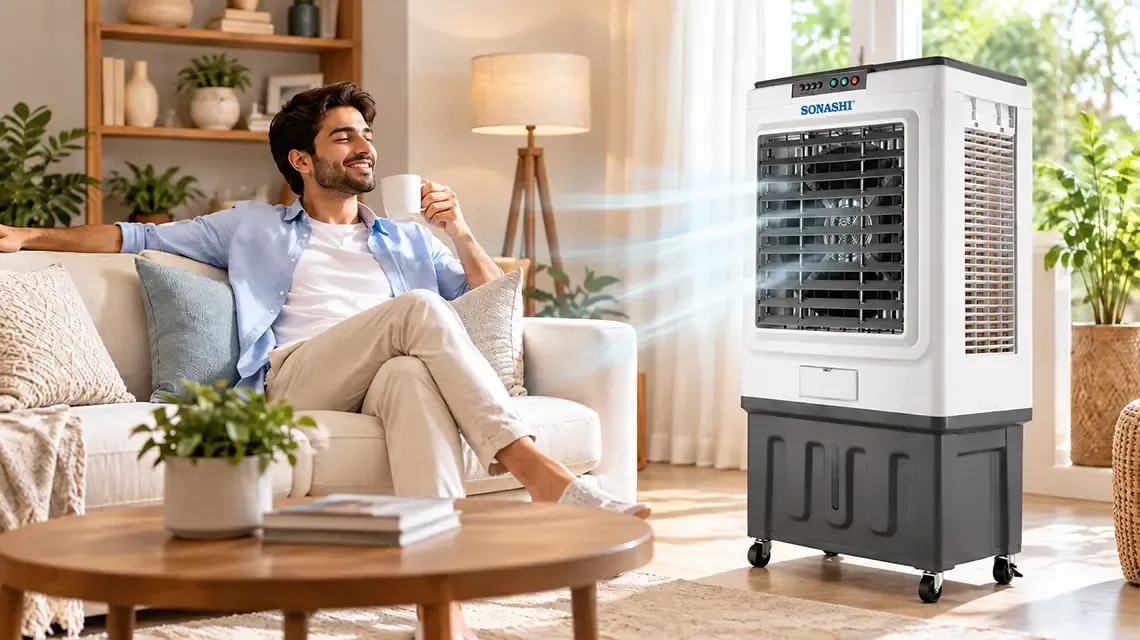
Sonashi offers air-cooler options for household use, but your buying decision should begin with ventilation, room layout and expected comfort. Then compare airflow, controls, portability and cleaning requirements against how you will actually use the appliance.
What Makes the Best Air Cooler for Home?
The right air cooler matches your room’s conditions, delivers useful airflow where people sit and remains convenient to refill and maintain.
An evaporative air cooler draws air through wet cooling material. As water evaporates, it absorbs heat and adds moisture to the passing air. Unlike an air conditioner, it does not use a refrigeration cycle to cool and dehumidify the room.
This distinction affects expectations. The US Department of Energy’s guidance on evaporative cooling explains why dry conditions and an outlet for moist air matter. In a humid, closed room, an evaporative cooler may provide limited temperature reduction while making the space feel damper.
Will an Air Cooler Work During UAE Summer?
It can be useful under suitable conditions, but performance varies with humidity, ventilation and heat entering the room.
Dubai and Abu Dhabi can experience humid summer periods, particularly near the coast. Before choosing an air cooler for summer, consider whether the intended space has safe ventilation and whether the air already feels humid. A basic hygrometer can help you observe indoor humidity rather than guessing.
Avoid assuming that a cooler will replace air conditioning during extreme heat. Running its water-cooling function in a sealed, air-conditioned room also adds moisture that the AC must remove. If conditions are unsuitable, a fan or properly sized air conditioner may better meet the room’s needs.
Which Air Cooler Features Should You Compare?
Airflow and Room Coverage
Look for published airflow and recommended coverage information where available. Tank size and motor wattage alone do not establish cooling coverage.
An air cooler for a small room should fit without blocking walkways and direct air towards the occupied area. An air cooler for a large room needs appropriate airflow and placement; a larger tank does not automatically make it suitable.
Tank Capacity and Refilling
A larger tank can reduce refill frequency, but actual water use depends on operating conditions and settings. Check whether the tank is easy to fill, drain and clean. Avoid assuming that its litre capacity guarantees a specific operating time.
Controls and Portability
Speed settings, oscillation, a timer and remote control can make daily adjustments easier. For a portable air cooler, inspect wheels, dimensions and the route between rooms. Follow the manual before moving a water-filled unit.
The Sonashi Air Cooler SAC-45 lists a 45 L tank, 150 W copper motor, three speeds, touch controls, remote control, a four-hour timer, honeycomb cooling filter, two ice boxes, auto swing and wheels. Compare these documented features with your needs rather than treating them as proof of a particular temperature drop.
What Should You Look for in a Bedroom or Living Room?
The best air cooler for bedroom use should offer manageable airflow, straightforward controls and an acceptable noise level. Ask for published noise information where available; low speed alone does not guarantee quiet operation.
Buying factor | Bedroom priority | Living-room priority |
Airflow | Adjustable flow near the sleeping area | Distribution across occupied seating |
Noise | Confirm acceptable sound at night | Assess sound during conversation or TV use |
Footprint | Clear access around the bed | Avoid blocking furniture and walkways |
Controls | Accessible settings and useful timer | Convenient speed and swing adjustment |
Water tank | Easy filling and cleaning | Refill needs matched to daily use |
Ventilation | Route for moist air to leave | Air exchange suited to the layout |
For both rooms, keep the inlet and outlet clear and follow the manufacturer’s placement instructions.
How Much Maintenance and Electricity Should You Expect?
Maintenance includes cleaning the tank, checking cooling pads and managing deposits according to the manual. Leaving water sitting unused can create hygiene and odour problems. Drain and dry the unit as instructed before extended storage.
Rated power helps estimate electricity use, but confirm whether a published figure describes the motor or the whole appliance. Daily consumption depends on operating power and hours used. No cooler automatically guarantees lower bills if it runs alongside other cooling equipment.
When comparing home appliances, assess documented construction, accessible parts and service support. Sonashi was established in 1993 and is distributed across more than 80 countries. Check the chosen model’s official warranty terms, including maintenance responsibilities, before purchasing.
Frequently Asked Questions
1. Does a bigger water tank mean stronger cooling?
No. A bigger tank mainly changes how much water the cooler holds and may reduce refilling. Cooling performance also depends on airflow, pad design, humidity and ventilation. Compare documented airflow or room-coverage information where available instead of choosing an appliance solely by its tank capacity.
2. Can I use an air cooler with the windows closed?
An evaporative cooler needs a way for moist air to leave the space. Keeping the room completely closed can allow humidity to build up and reduce cooling effectiveness. Follow the manufacturer’s ventilation guidance, and consider outdoor conditions before opening windows in an air-conditioned UAE home.
3. Do ice boxes make an air cooler work like an AC?
No. Ice boxes may temporarily affect the water temperature, but they do not turn an evaporative cooler into a refrigerated air conditioner. Results still depend on room conditions and airflow. Use only manufacturer-approved ice accessories and do not expect sustained AC-style cooling or dehumidification.
Conclusion
The best air cooler for home is one suited to your humidity, ventilation and daily routine. Compare airflow, tank access, noise, controls and maintenance before deciding on size or price. Keep expectations realistic during humid UAE summer weather, and follow the operating instructions. Explore the Sonashi air-cooler collection to review available models and check their specifications, warranty terms and support options before buying.