Best Water Dispenser for Home and Office: What to Check Before Buying
Replacing a heavy water bottle, waiting for chilled water and finding space beside the kitchen counter can matter more than a dispenser’s appearance. The best water dispenser for home matches your household’s drinking habits, available space and ability to change bottles comfortably.
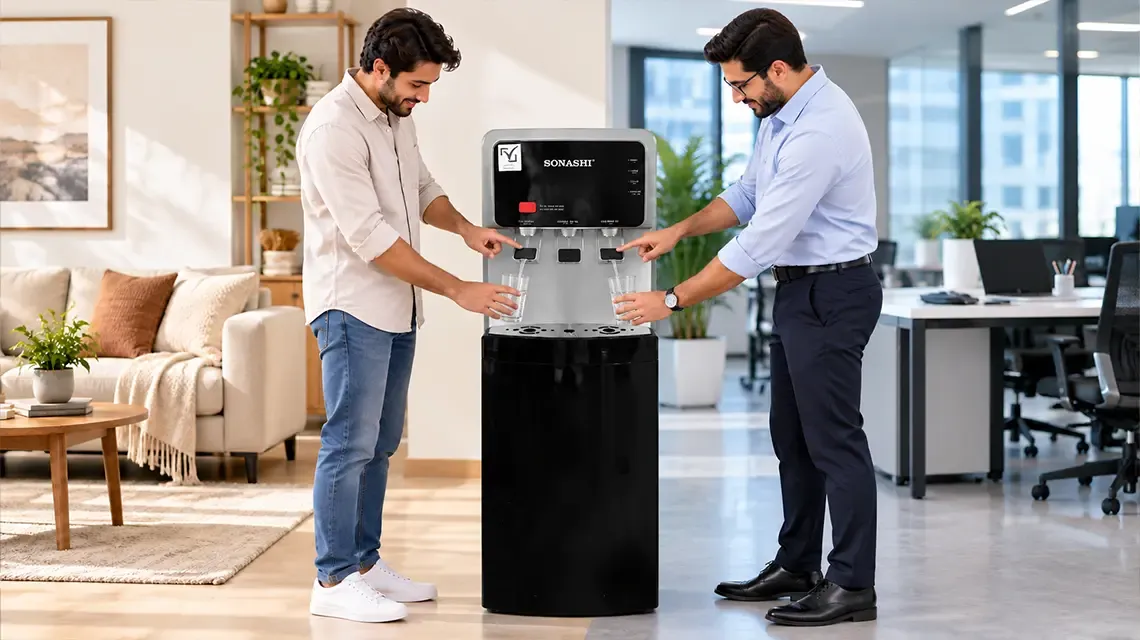
Sonashi UAE offers models worth comparing by loading arrangement, temperature options and maintenance requirements. For families and workplaces in Dubai, Abu Dhabi and other emirates, start with everyday use: who will refill it, how many people will use it and whether hot water is actually needed.
What Makes the Best Water Dispenser for Home?
A suitable home water dispenser provides the temperature options you need, fits its intended location and remains manageable to refill and clean.
Before comparing models, answer four questions:
- Do you want chilled water only, or hot and room-temperature water too?
- Who will replace the bottle?
- How often will several people fill glasses or bottles together?
- Is there enough space for ventilation and cleaning access?
The bottle’s volume does not tell you how much chilled water is immediately available. Internal tank capacity and cooling recovery are separate specifications, so check both where published.
Should You Choose Top Loading or Bottom Loading?
Top-loading dispensers hold the bottle above the unit. They make the remaining water easy to see, but changing bottles requires lifting and positioning them.
A bottom loading water dispenser places the bottle inside a lower compartment. This reduces the need to lift it onto the top, although users still need to move the bottle and connect it correctly.
Dispenser arrangement | Practical advantage | What to consider | Suitable use |
Top loading | Bottle level is visible | Lifting and overhead clearance | Homes with manageable bottle-changing arrangements |
Bottom loading | Bottle sits in a lower compartment | Connection procedure and cabinet access | Users seeking easier bottle positioning |
Countertop | Leaves floor space available | Counter height, clearance and stability | Smaller kitchens, where dimensions allow |
Bottle pump | Dispenses water without a full cooler | Usually lacks heating and refrigeration | Room-temperature water needs |
These arrangements describe convenience, not a quality ranking. Confirm bottle compatibility and temperature functions for each model.
The Sonashi Bottom Loading Water Dispenser SWD-56N lists hot, cold and normal-water outlets, compressor cooling, an LED indicator and a stainless-steel water tank. Check its instructions for bottle installation and maintenance before deciding whether it suits your routine.
What Should You Check in a Hot and Cold Water Dispenser?
Check the stated water temperatures, tank capacities and heating or cooling output per hour, where available. These figures answer different questions.
Tank capacity indicates stored water. Output per hour helps explain how quickly the appliance can replenish heated or chilled water under stated conditions. Neither guarantees that every glass poured during a busy period will have the same temperature.
For families with young children, look for a documented hot-water safety lock and consider tap accessibility. Never assume that three taps or an attractive control panel includes child protection.
Also distinguish a storage cabinet from a refrigerator compartment. Only treat it as refrigerated storage when the manufacturer explicitly identifies it that way.
How Do Office Requirements Differ from Household Use?
The best water dispenser for office use should handle shared demand and have a clear refill and cleaning routine.
A small home may use water throughout the day. An office water dispenser can face several users arriving together after meetings or at lunchtime. When choosing a water cooler for office use, compare cooling recovery, bottle replacement frequency and access around the unit.
Assign responsibility for ordering water, changing bottles and cleaning the dispenser. A convenient appliance can become frustrating when nobody checks the remaining supply.
How Can UAE Buyers Assess Energy Use and Placement?
Rated wattage describes power demand when a function operates; it does not establish daily electricity consumption. Thermostat cycling, room conditions and usage all affect consumption. Compare published energy data where available instead of assuming that lower wattage always means greater efficiency.
During UAE summer, avoid direct sunlight and follow ventilation clearances. Keep the unit away from cooking heat, damp areas and cramped cupboards. Confirm indoor-use requirements before considering a balcony.
For Dubai apartments or Abu Dhabi villas, measure the appliance footprint and the space needed to replace bottles. When comparing other home appliances, plan socket access so the dispenser does not depend on an unsuitable extension arrangement.
What Maintenance and Support Should You Consider?
Check how to clean the reservoir, taps, bottle connection and removable drip tray. Follow the appliance manual for cleaning products, rinsing and maintenance intervals.
Health Canada’s bottled-water and water-cooler hygiene guidance highlights the importance of keeping dispensers clean. Heating and cooling alone should not be treated as water purification.
Sonashi was established in 1993 and is distributed across more than 80 countries. Alongside brand heritage, assess documented construction, official warranty coverage and access to service support. Keep the purchase receipt and check which maintenance responsibilities apply.
Frequently Asked Questions
1. Is a bottom-loading dispenser better for home use?
A bottom-loading dispenser can be more convenient when lifting bottles onto a tall unit is difficult. It does not automatically provide better cooling, lower electricity use or cleaner water. Compare the installation process, temperature functions, maintenance requirements and published performance information before choosing it over a top-loading model.
2. Does a water dispenser filter drinking water?
Only if the model includes a documented filtration system. Many bottled-water dispensers simply deliver, heat or cool the supplied water. Use drinking water from an appropriate source and maintain the dispenser as instructed. Do not assume a stainless-steel tank or hot-water outlet removes contaminants.
3. What should I check before buying a dispenser for several users?
Check cooling recovery, internal tank capacity, compatible bottle size and how easily users can refill glasses or larger bottles. Consider peak demand rather than headcount alone. Several people filling bottles together may require more chilled-water availability than a larger group drinking small amounts throughout the day.
Conclusion
Choosing the best water dispenser for home or office starts with loading convenience, temperature requirements and expected demand. Measure the placement area, check published specifications and plan bottle changes and cleaning before purchasing. Explore the Sonashi water dispenser collection to compare available models, then review the individual product’s operating instructions, warranty terms and support options against your household or workplace needs.