Best Electric Oven for Home: Types, Sizes and Features Explained
An oven can have enough litres on its label and still leave you struggling to fit your favourite baking tray. Choosing the best electric oven starts with the food and cookware you use, followed by available space, heating functions and electrical requirements.
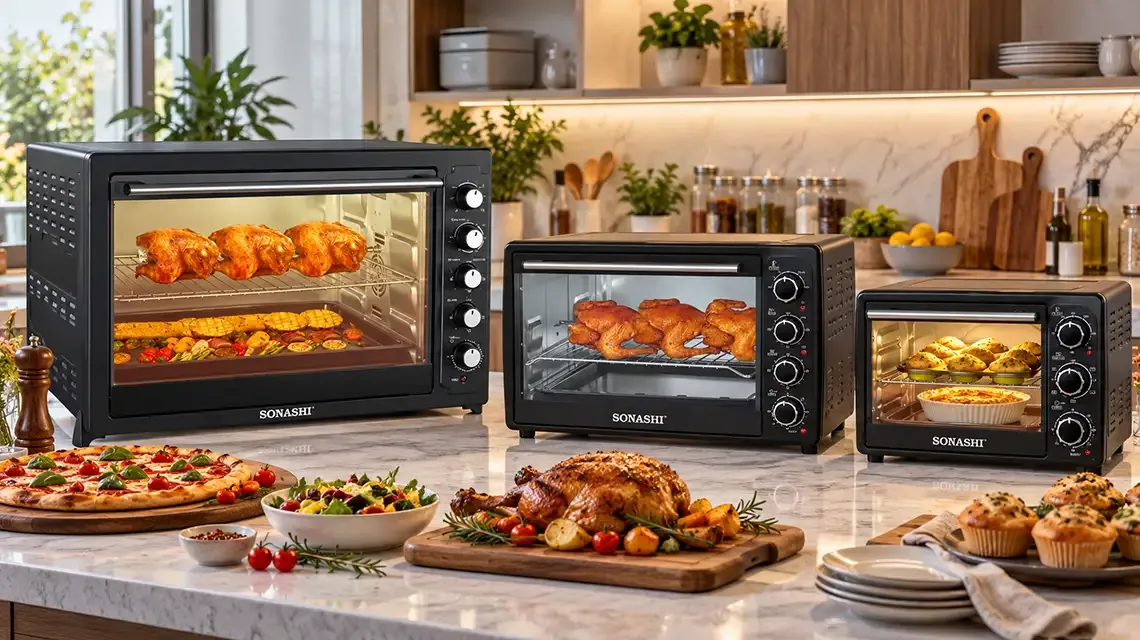
Sonashi’s electric oven collection gives UAE households options to compare for everyday baking and roasting. For a Dubai apartment or an Abu Dhabi family kitchen, the useful question is not simply “How big is it?” but “Will it cook my usual meals, fit safely and remain practical to clean?”
What Makes the Best Electric Oven for Your Home?
A suitable oven fits your cookware, provides the heating modes your recipes need and works with your kitchen’s installation requirements.
Before comparing prices, write down three meals you cook regularly. A cake needs sufficient height above the tin; a pizza needs a usable tray width; a roast needs clearance around the food.
This makes an electric oven buying guide more useful than choosing by capacity alone. Check internal measurements, rack positions, temperature range and supplied accessories against those meals.
Which Electric Oven Types Should You Compare?
Installation style and cooking technology describe different things. A countertop oven can include fan-assisted cooking, while a built-in oven may offer conventional and convection modes.
Type or function | What it means | What to check |
Countertop oven | Stands on a suitable work surface | Footprint, ventilation and door clearance |
Built-in oven | Fits within an approved cabinet opening | Installation dimensions and electrical supply |
Conventional heating | Uses heating elements without fan-assisted circulation | Element selection and shelf placement |
Convection heating | A fan circulates heated air | Recipe adjustments and available modes |
Grill function | Applies strong heat from above | Distance from food and suitable cookware |
An electric oven is also different from a microwave. Do not assume it offers microwave reheating, steam cooking or air frying unless those functions are explicitly listed.
How Do You Choose Electric Oven Sizes and Capacity?
Compare electric oven capacity in litres, then confirm what actually fits inside. Two ovens with similar volumes can have different cavity shapes.
For an electric oven for a small kitchen, measure:
- The appliance’s width, depth and height.
- The manufacturer’s required clearance around it.
- Space for the door to open fully.
- Access to controls and the electrical connection.
- Internal width and depth for your existing trays.
A larger household may benefit from more cooking space, but extra rack positions do not guarantee that several dishes will cook evenly together. Check the instructions for recommended loading.
A compact oven can suit small meals, while frequent batch baking or large roasting dishes may justify a larger cavity. Choose around your normal cooking load rather than an occasional gathering.
Which Electric Oven Features Matter in Daily Cooking?
Temperature and Heating Controls
Look for a temperature range suited to your recipes and clearly explained heating selections. Separate upper and lower heating options can be useful, but understand what each dial actually controls.
A timer with a bell does not automatically mean the oven switches off. Confirm its operation in the manual.
Trays, Racks and Cleaning Access
Check which accessories are included, whether racks slide out easily and how the interior should be cleaned. Leave enough room around cookware for the appliance to operate as intended.
The Sonashi 21 Litres Electric Oven lists a 100–250°C adjustable temperature selector, a 60-minute timer with bell, four-way heating selection and stainless-steel heating elements. Its listed accessories include a baking tray, wire rack, tray handle and tong. Compare these details with your recipes and confirm the supplied specification before purchasing.
How Much Electricity Does an Electric Oven Use?
Electric oven power consumption depends on input power, temperature, cooking duration and how often the heating elements cycle.
For example, a hypothetical 1,500 W oven drawing full power continuously for one hour would use 1.5 kWh. Actual consumption may differ because thermostat-controlled elements switch on and off.
Higher wattage does not automatically mean a higher bill for every meal. Compare published energy information where available, avoid unnecessary idle time and keep the door closed while checking food through the glass.
In UAE summer, ovens add heat to the kitchen. Maintain ventilation and appliance clearances, and plan dishes together where their cooking requirements are compatible.
Electric Oven vs Gas Oven: Which Should You Choose?
Choose according to cooking preferences and the connections your property permits. An electric oven needs an appropriate electrical supply; a gas oven requires an approved gas arrangement and suitable installation.
For renters, confirm building and tenancy requirements before changing appliance type. Installation cost and available services can matter more than general claims about which fuel is cheaper.
Electrical Safety First’s oven installation and safety guidance supports checking power requirements, keeping vents clear and following manufacturer instructions. Ask a qualified installer when the connection requirements are unclear.
When comparing kitchen appliances, assess documented construction, cleaning access and service support. Sonashi was established in 1993 and is distributed across more than 80 countries. Check official warranty terms for the chosen model rather than assuming identical coverage across the range.
Frequently Asked Questions
1. What size electric oven should a small household buy?
Choose a size that accommodates your usual cookware and meal portions. A compact model may handle smaller dishes comfortably, but check internal dimensions before buying. If you regularly bake large cakes or prepare several portions together, more usable space may be worthwhile even with fewer people at home.
2. Is convection necessary for baking cakes?
No. Many cakes can be baked using conventional heating. Fan-assisted cooking changes heat circulation and may require temperature or timing adjustments. Follow the recipe and appliance instructions rather than assuming the fan should always be on. Shelf position and adequate space around the tin also affect results.
3. Can a countertop oven go inside a kitchen cabinet?
Only if the manufacturer specifically approves that installation. A freestanding countertop oven needs its stated ventilation clearances and a heat-resistant location. Placing it inside a confined cabinet can trap heat. Choose a built-in model when you need an appliance designed for an enclosed installation opening.
Conclusion
The best electric oven is the one that fits your everyday dishes, available space and electrical arrangements. Compare usable cavity dimensions, heating modes, controls and cleaning requirements before focusing on litres or price. Explore Sonashi’s electric oven collection linked above, then confirm the chosen model’s current specifications, installation instructions and warranty terms. A few measurements before purchasing can prevent years of awkward tray placement and limited cooking space.